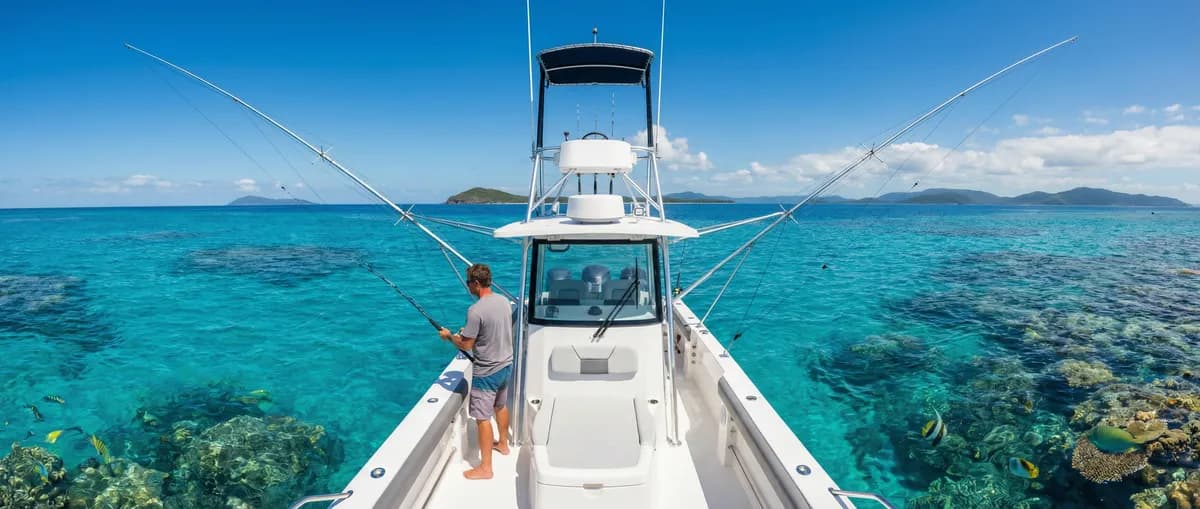
Wind Speed: The Surface Driver
"Wind pushes bait, bait brings fish."
Wind speed affects surface chop and bait movement. FishDay weighs wind consistency to match action days without noise.
We have all been there. You planned your fishing trip for weeks, only to wake up to a howling wind that turns the lake into a choppy mess. Your first instinct might be to crawl back into bed, but what if we told you that windy days can be some of the most productive fishing days you will ever have?
It is a paradox that has frustrated anglers for centuries. Some of our best catches come on days with a steady breeze, while other times, the wind seems to shut the bite down completely. The key, as with all things in fishing, is to understand the why.
In our previous posts, we explored how barometric pressure changes create feeding frenzies and how stable pressure leads to predictable patterns. We also saw how water temperature governs fish metabolism. Now, it is time to look at the surface driver, the great mover and shaker of the aquatic world: wind.
The Science: How Wind Transforms the Underwater World
Wind is more than just a nuisance that makes casting difficult. It is a powerful force that sets in motion a chain reaction, fundamentally altering the underwater environment.
Wind-driven currents: The plankton conveyor belt. The most critical concept to grasp is this: wind pushes bait, and bait brings fish. Wind blowing across the surface creates currents that move plankton. As wind pushes surface water, it stacks up on the windward shore, creating downwelling. This circulation concentrates plankton. Where the plankton go, the baitfish follow. Where you find baitfish, you will find predatory fish.
Oxygen mixing: A breath of fresh air. In warm months, lakes can stratify into warm, oxygen-rich upper layers and cold, oxygen-poor lower layers. Wind is the great mixer. Surface chop breaks down stratification and mixes oxygen into deeper water. A steady wind can turn a sluggish, lethargic body of water into an active, oxygenated environment.
Surface chop: The cloak of invisibility. A calm, glassy surface makes fish wary and easily spooked. Wind-driven chop breaks up light and creates a camouflaged view of the surface. Fish feel more secure and are more likely to venture out from cover to hunt.
Wind Speed Ranges: From Glass to Whitecaps
Calm (0-5 km/h): Mirror-like surface. Fish are extremely spooky. This is finesse fishing with long casts and stealth.
Light breeze (5-15 km/h): The sweet spot. It creates a perfect ripple, breaking up light and making fish more active. The walleye chop is a classic example.
Moderate wind (15-25 km/h): Strong currents and concentrated baitfish. Boat control becomes a challenge, but fishing can be excellent.
Strong wind (25+ km/h): Casting and boat control are difficult. Many anglers head for the docks, but the brave and skilled can be rewarded with an epic day.
The FishDay Advantage: It Is Not Just Speed, It Is Consistency
Most weather apps tell you the current wind speed, but they miss the most important factor: consistency. A steady 15 km/h wind is completely different from a 5 km/h wind gusting to 25 km/h. Consistent wind creates predictable currents and baitfish locations. Gusty, erratic winds create chaos.
That is why we built the Wind Consistency (km/h) parameter in FishDay. We analyze wind patterns over time to determine stability. A high Wind Consistency rating means you can trust the pattern. It filters out the noise and helps you focus on the days when wind is a help, not a hindrance.
Wind Direction: The Final Piece of the Puzzle
Windward shores: These are the shorelines the wind is blowing into. This is where baitfish are pushed and predators wait. Look for points, humps, and structure that further concentrate bait.
Leeward shores: These are protected from wind. The calmer water can be a refuge for both baitfish and predators, especially in very strong winds.
A Story of Discovery
I will never forget the day it all clicked for me. I was fishing a tournament on a large, windswept lake. The forecast was 20-30 km/h winds, and most of the field was grumbling. I had studied the wind’s effect on this lake for years. I knew a strong north wind would stack baitfish on long, tapering points on the south shore.
While the rest of the field hid in calm bays, I battled the waves and made precise casts to wind-battered points. It was tough fishing, but I was rewarded with one of my best tournament finishes ever.
Putting It All Together: The FishDay Method
Wind is just one piece of the puzzle. A steady wind combined with a sharp drop in barometric pressure is a recipe for a feeding frenzy. A light breeze on a warm, stable day is a great time to finesse a jig or a drop shot.
The FishDay app helps you see the whole picture. We track wind, pressure, temperature, and more, and our algorithms analyze how they work together to create the best fishing opportunities.
Your Turn to Master the Wind
Stop letting the wind be your enemy. Start seeing it for what it is: the surface driver, the great mover of bait, and one of the most powerful forces you can harness to become a better angler.
Ready to stop guessing and start catching? Download the FishDay app today and see how our Wind Consistency parameter can help you unlock the secrets of windy day fishing.
Parameter: Wind Consistency (km/h)
Consistency matters more than spikes. That is how FishDay finds repeatable patterns.
Sources
- https://www.researchgate.net/publication/227686859_The_Effects_of_Wind_on_the_Behavior_of_Fish
- https://www.wired2fish.com/fishing-tips/how-wind-affectsbass-location-and-behavior
- https://agupubs.onlinelibrary.wiley.com/doi/full/10.1029/2020WR027487
- https://www.takemefishing.org/how-to-fish/how-tocatch-fish/how-to-fish-in-the-wind/
- https://www.onthewater.com/wind-direction-and-fishing
Comments